
Landlord or Tenant: Who Pays for AC Duct Cleaning Dubai
The short answer
Under Dubai Law 26 of 2007 Article 16, the landlord is responsible for maintenance and repair of defects unless the contract says otherwise. By convention the tenant covers minor maintenance under AED 500, where a routine apartment duct clean of AED 299 to AED 599 usually lands. Mould is a defect, so it is the landlord's.
This is the Dubai-specific answer to who pays for AC duct cleaning, with the article number, the convention and the dispute route, rather than a vague reference to the rental law. A documented move-in air check in Dubai is the single most useful thing either side can do, because most disputes come down to the condition at hand-over.
What Law 26 of 2007 Article 16 says
Dubai Law 26 of 2007 regulates the relationship between landlords and tenants. Article 16 puts the maintenance works and repair of any damage or defect that affects the tenant's use of the property on the landlord, unless the two parties agree otherwise in the contract. That last clause matters: responsibility for routine cleaning can be shifted by what you sign.
A Gulf News legal column citing this article notes the landlord is responsible for the maintenance works and repairs of any damage and defect. So the question is whether a given duct clean is routine maintenance, which can be assigned to the tenant, or the repair of a defect, which stays with the landlord.
That single distinction, maintenance versus defect, decides almost every AC dispute in Dubai. A dusty duct that simply needs a routine clean after normal use is maintenance. A system that has failed, leaks, or has grown mould that affects the property or your belongings is a defect. The same guideline column notes landlords are responsible for air-conditioning when required, which points at the AC system itself rather than routine hygiene. Where cleaning falls depends on why it is needed, not just on the word cleaning.
The AED 500 convention
The widely used rule of thumb in Dubai is that the landlord covers maintenance above AED 500 and the tenant covers minor wear and tear below it, with landlords responsible for air-conditioning when required. A routine apartment duct clean on the Noor Dubai rate card is AED 299 for a studio, AED 399 for a 1-bed and AED 599 for a 2-bed, so an apartment clean usually falls to the tenant as minor maintenance.
A villa is different. Villa duct cleaning is priced per AC unit at AED 299, minimum three units, so a whole-villa clean runs well above AED 500 and is more likely to be treated as the landlord's responsibility, especially if it is the first clean since handover. This is where the figures for AC duct cleaning in JVC and Dubai Marina apartments against a Business Bay villa or large unit actually change who pays.
The AED 500 line is a convention, not a statute, so it is a starting point for negotiation rather than a hard rule a court will apply mechanically. But it is widely understood by landlords, agents and tenants alike, which is why it is useful: it gives both sides a shared reference. A single apartment duct clean below that figure is rarely worth a dispute; a multi-unit villa clean well above it usually warrants a conversation before anyone books.
| Scenario | Typical cost | Usually pays | Why |
|---|---|---|---|
| New tenancy, apartment clean | AED 299 to 599 | Tenant | Under AED 500 convention, minor maintenance |
| Mid-tenancy musty smell, apartment | AED 299 to 599 | Tenant | Routine hygiene during occupation |
| Mould found in the ducts or on walls | Quote after inspection | Landlord | A defect under Article 16, not wear |
| Post-renovation by the landlord | Quote after inspection | Landlord | Dust from the landlord's works |
| Whole-villa first clean since handover | AED 897+ | Negotiable, often landlord | Above AED 500, arguably a defect |
Mould changes everything
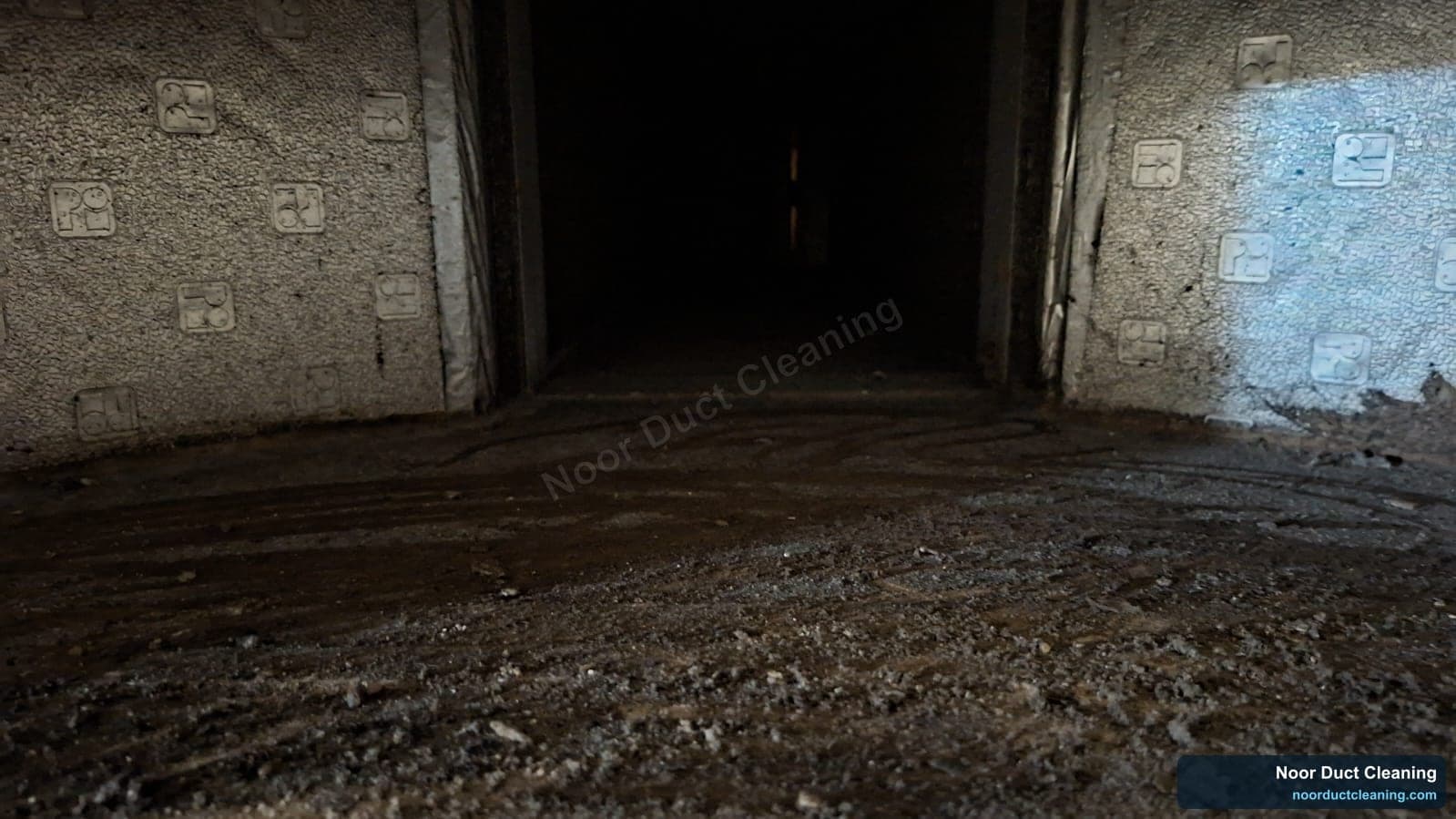
A musty duct is maintenance. Visible mould is a defect. A Gulf News case covered a couple in a studio with severe mould infestation, where the lawyer cited Law 26 of 2007 Article 16 to argue the landlord is responsible for the maintenance works and repairs of any damage and defect. Mould that affects your use of the property, or your belongings, sits with the landlord.
If the landlord refuses, the dispute goes to the Rental Disputes Centre. The filing fee is 3.5% of the annual rent, with a minimum of AED 500 and a maximum of AED 20,000. A dated DuctCam report showing the mould is exactly the evidence that process needs. For how we diagnose it, see AC smell in Dubai and whether the black dust is mould.
A practical sequence helps here. Document the problem with dated photos and, ideally, a camera report. Put the request to the landlord in writing, by email or message, so there is a record. Give a reasonable period to respond. Only if that fails does the RDC route make sense, and at that point the dated evidence you gathered at the start is what carries the case. Verbal complaints and undated phone photos are far weaker than a documented inspection.
It is also worth distinguishing genuine mould from the black dust many tenants assume is mould. Not every dark mark at a grille is a defect; carbon dust and broken-down insulation can look similar and are usually maintenance, not a landlord's problem. Getting that identified correctly matters, because it decides whether you have a maintenance request or a defect claim.
Book a dated move-in air check so the hand-over condition is on record for both sides.
Get my Dubai quoteWhat to write into the Ejari addendum
Because Article 16 lets the parties agree otherwise, the cleanest approach is to state it in writing. An addendum to the tenancy contract, registered with Ejari, can set exactly who pays for AC duct cleaning and how often.
- Who arranges and pays for routine AC and duct cleaning during the tenancy
- How often cleaning is expected, for example once a year on inspection
- That the landlord covers mould and defects as maintenance under Article 16
- That a dated move-in and move-out report sets the baseline condition
Putting it in writing is not about distrust; it is about removing the ambiguity that Article 16's unless-agreed-otherwise clause deliberately leaves open. A landlord who wants the tenant to handle routine cleaning can say so clearly, and a tenant who accepts that knows exactly what they have taken on. Without the clause, the same clean becomes a grey area that only surfaces as an argument at renewal or move-out, which helps nobody.
For property managers running several units, a standard addendum across the portfolio is worth having. It sets one consistent rule, references the move-in and move-out report as the baseline, and means every tenancy starts and ends on the same documented footing. That consistency is also what makes a dispute, if one ever arises, quick to resolve rather than a case of reconstructing who said what a year ago.
The move-in and move-out air check as evidence
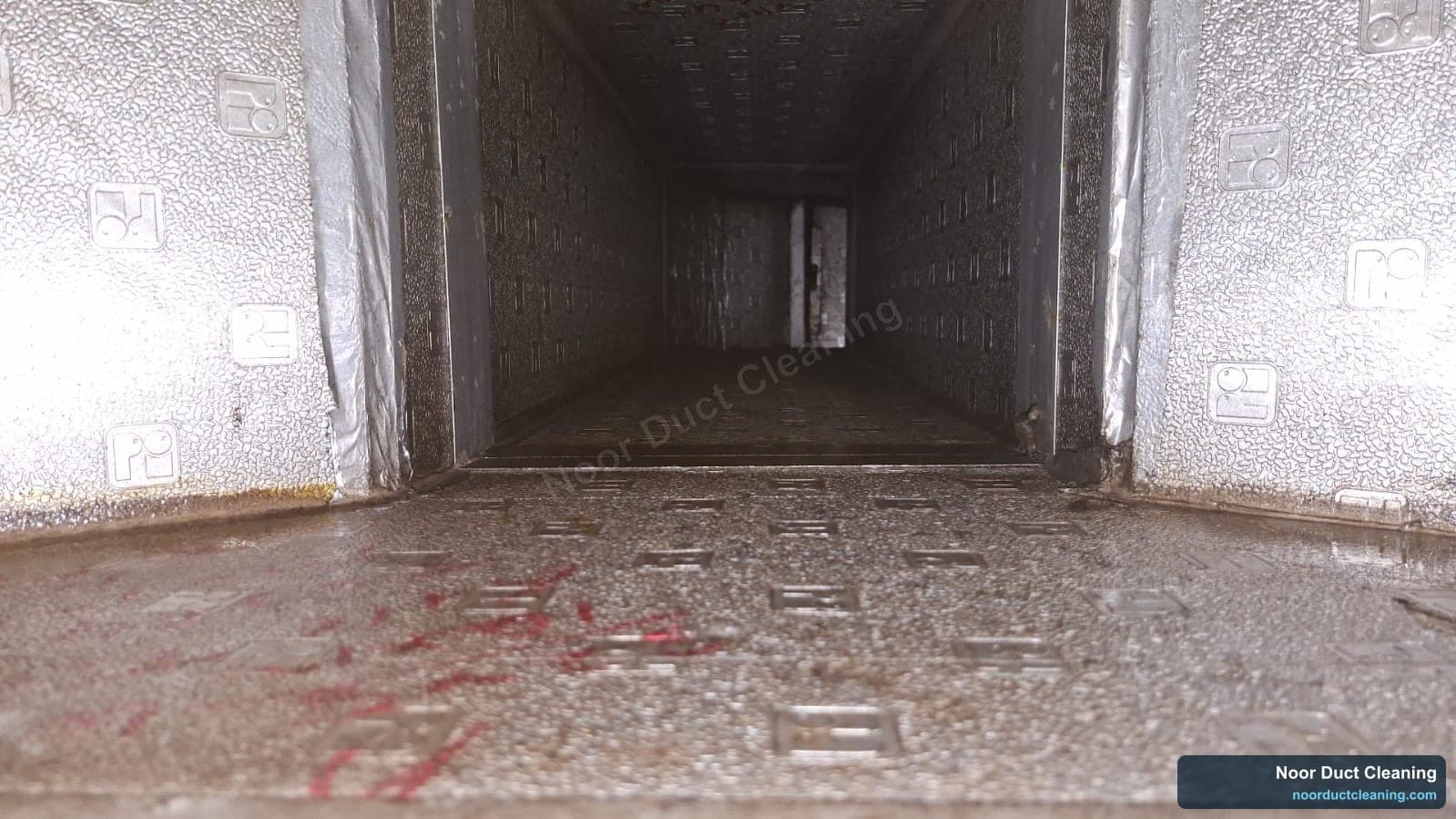
A move-in air check documents the condition of the ducts and coil with the DuctCam on the day you take the keys, dated and photographed. For a tenant it proves what you inherited; for a landlord it proves the unit was handed over clean. In a dispute, that dated report is worth far more than a verbal account. Our move-in air check hub explains the service, and what is DuctCam shows how the camera evidence is captured.
The move-out check is the mirror image and just as useful. A tenant who can show the ducts were left in the same reasonable condition they were received in has a strong answer to any deposit deduction for cleaning. A landlord who can show a genuine decline beyond fair wear has a basis to recover a real cost. Either way, two dated reports at the start and end of a tenancy remove almost all of the argument, because the facts are on record rather than remembered.
High-turnover buildings are where this pays off most. In busy apartment stock across Marina, JVC and Business Bay, units change hands often and nobody has a reliable history of the AC. A dated report at each change-over builds that history, which is why we recommend it to tenants and landlords equally rather than framing it as one side's tool against the other.
One last practical point on timing. The heaviest lease-signing months in Dubai run from autumn into spring, as families move around the school calendar and the cooler weather. That is precisely when a move-in check is easiest to fit in and most useful, because you are establishing the baseline at the very start of the tenancy rather than trying to prove a point months later. Booking it alongside the other move-in jobs, utilities, Ejari and the handover inventory, is the tidiest way to get it on record.
Only for damage beyond fair wear and tear, not for routine cleaning you were contractually responsible for during the tenancy. If the ducts were documented as clean at move-in and you leave them in reasonable condition, a deduction for cleaning is hard to justify. A dated move-out report protects you against it.
If it is routine maintenance under AED 500 and your contract assigns minor maintenance to you, refusing is weak. If it is the repair of a defect such as mould, Article 16 puts it on the landlord and you can decline and, if needed, file at the Rental Disputes Centre. The distinction between wear and defect is what decides it.
It can be, because Article 16 lets the parties agree otherwise in the contract. Check your tenancy contract and any Ejari addendum. Even where routine cleaning is assigned to you, the landlord still owns defects and major repairs, so a mould problem does not become yours just because a clause names you for cleaning.
Mould is treated as a defect rather than wear, so under Article 16 it is the landlord's responsibility to remedy, as a Gulf News legal case set out. Get a dated DuctCam report documenting it, give the landlord written notice, and if they refuse, the Rental Disputes Centre route applies with a filing fee of 3.5% of annual rent, minimum AED 500.
A dated inspection report with DuctCam photos of the ducts and any mould, your tenancy contract and Ejari, and a written request to the landlord that went unanswered. The RDC fee is 3.5% of annual rent, so having clear, dated evidence of a genuine defect is what makes that cost worthwhile.
Get a dated, photographed air check that stands up as evidence for either side.
Get my Dubai quoteSources
Not sure where you stand?
Serving Dubai, Sharjah and Ajman. Take the free 60-second BreatheScore or message us about your Dubai property.
Related guides
AC Smell in Dubai: Musty, Sewage, Vinegar Causes
A musty, sewage or vinegar smell from your AC each points to a different cause, and the black dust at the vents is not always mould. Here is how to tell them apart.
AC Duct Cleaning Cost Dubai: Full Price List
The full Dubai price list from apartments to villas, set next to credited competitor ranges, with what legitimately adds cost and what never should.
What Is DuctCam? Seeing Inside Your AC Before You Pay
A camera inside your ducts means no guessing and no upselling. Here is how DuctCam inspection works.