
AC Smell in Dubai: Musty, Sewage, Vinegar Causes
The short answer
A musty AC smell in Dubai usually means mould on a damp coil or in the ducts, often when relative humidity sits above 60 per cent. A sewage smell points to a dry drain trap or blocked condensate line. A vinegar or sour smell points to bacteria on the coil. Find the source, do not mask it.
A smell from the air conditioning is one of the most common calls we take in Dubai apartments and villas, and it almost always has a single, findable cause. The mistake is to reach for an air freshener, which hides the odour for an hour while the source keeps growing inside the unit. This guide gives you a diagnosis table that maps each smell to its likely cause and the right fix, explains whether the black dust at your vents is really mould, and sets out an honest fix hierarchy so you only pay for what the problem needs.
The humidity context matters here. Dubai Municipality's indoor air quality guideline, DM-HSD-GU119, sets a comfort band of 20 to 60 per cent relative humidity and a fungi limit of 500 colony forming units per cubic metre of air. When a home is overcooled and the internal humidity climbs past that 60 per cent line, condensation feeds mould on coils, trays and duct lining, and that is what produces the classic musty start-up smell.
Diagnosis table: smell to cause to fix
Use this as a starting point, not a final verdict. Several smells overlap, and a camera inspection is the honest way to confirm which one you actually have before anyone cleans anything.
| Smell | Most likely cause | Honest fix | Who to call |
|---|---|---|---|
| Musty or earthy on start-up | Mould on a damp coil, tray or duct lining, often with room humidity above 60 per cent | Coil wash, drain tray clean, duct clean, then fogging sanitisation; fix the overcooling that caused the damp | A duct and coil cleaner; a mould specialist if growth is widespread |
| Sewage or rotten drain | A dry P-trap, a blocked condensate drain, or a building riser venting back | Clear and flush the condensate line, refill the trap; if it is the building riser, report it to facilities management | Your duct and drain cleaner first, building FM if it is the shared riser |
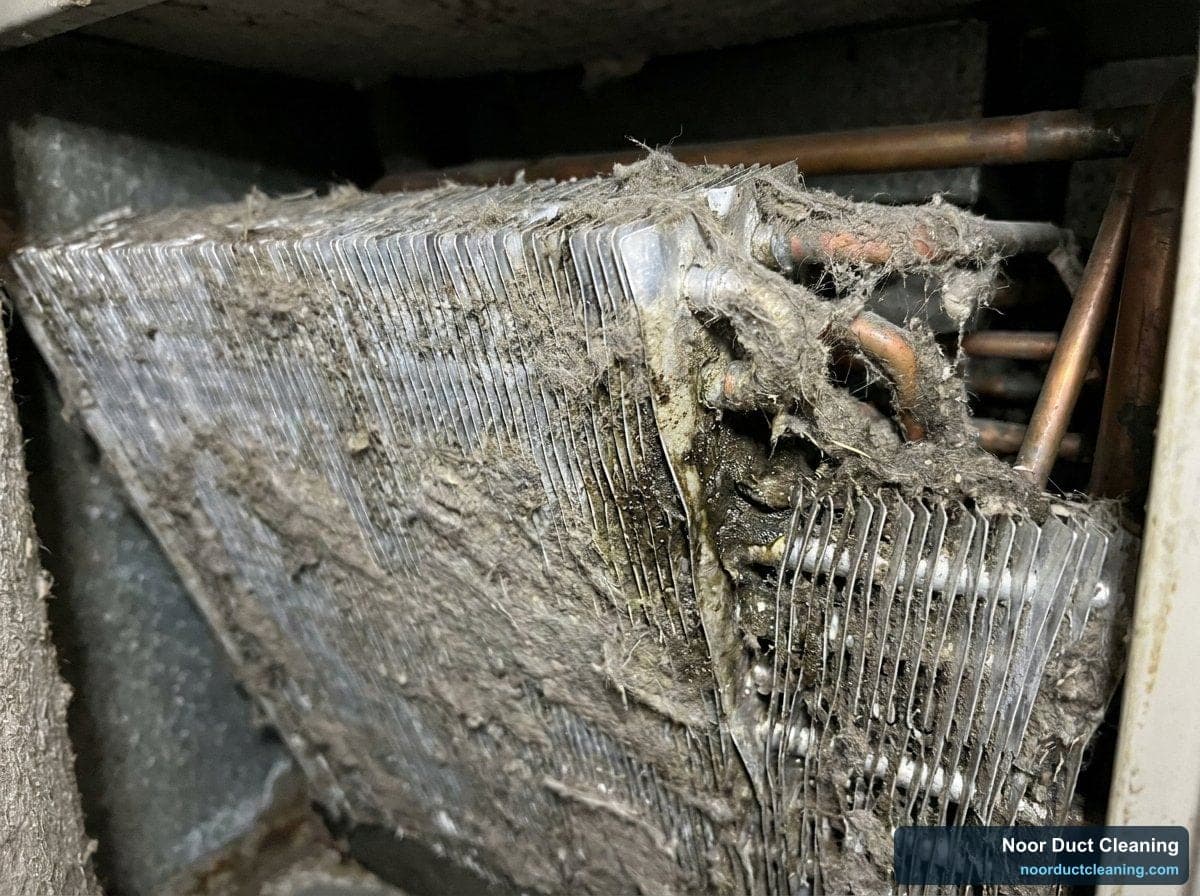
| Vinegar, sour or sock-like | Bacteria growing on a wet coil (sometimes called dirty sock syndrome) | Coil deep wash and sanitisation; a cleaner filter so the coil dries between cycles | A coil and duct cleaner |
| Burning or hot electrical | Overheating motor, wiring or a seized fan, not a cleaning issue | Switch the unit off at the isolator and stop using it until checked | A licensed AC electrician or technician |
| Rotten eggs or gas | A gas leak in the building, unrelated to the AC itself | Leave the area, do not switch anything on or off, ventilate if safe | DEWA emergency line or your gas supplier, immediately |
The burning and gas rows are safety items, not cleaning jobs, and we will always tell you to stop and call the right trade rather than sell you a clean you do not need. Everything else on the list is a hygiene problem we can inspect and quote honestly.
Is the black dust actually mould?
The black marks fanning out from a supply grille are not automatically mould. Three things look similar to the naked eye and need different responses.
- Settled dust and carbon. Grey to black staining around a grille is often just fine airborne dust and soot pulled through the system over months. It wipes off the grille but keeps coming back because the supply behind it is loaded.
- Insulation breakdown. Older flex ducts can shed dark fibres from degrading internal lining, which looks like soot but is the duct itself wearing out. A camera shows this clearly.
- Genuine mould. Fuzzy, patchy growth on a damp surface, usually near the coil, tray or the first metre of duct, with a musty smell to match. This is the one that needs proper remediation, not just a wipe.
The only reliable way to separate these is a camera inspection and, where there is doubt, a surface swab. A DuctCam inspection shows the inside of the run so you can see whether you are looking at dust, shedding liner or growth before you decide on any work. The United States Environmental Protection Agency is clear that duct cleaning is warranted when there is substantial visible mould growth, vermin, or ducts clogged with excessive dust and debris, and that routine biocide use is not something to accept by default.
Why Dubai homes grow mould in the first place
Two habits drive most of the musty smells we find. The first is overcooling. Setting the thermostat to 18 degrees pushes internal relative humidity up, and when it crosses the 60 per cent upper limit in DM-HSD-GU119, cold surfaces start to condense and feed growth. The second is coastal location. Humidity on and near the water runs higher than mainland Dubai for much of the year, so homes in AC duct cleaning in Dubai Marina, AC duct cleaning in JLT and the frond villas we clean in AC duct cleaning on Palm Jumeirah start from a damper baseline than inland communities.
The practical takeaway is to keep the set point moderate, keep filters clean so the coil dries between cycles, and deal with the source rather than the symptom. A fresh-smelling home is the result of a dry, clean coil and a clear drain, not a scented spray.
Book a camera inspection and we will tell you the real source of the smell before quoting any clean.
Get my Dubai quoteThe holiday return smell
A lot of odour calls come after a trip away with the AC switched off through the Dubai summer. The home sits warm and humid for weeks, the coil and tray dry out and then sweat, and you come back to a strong musty hit on the first start-up. The fix is the same hierarchy below, and the prevention is to leave the AC running at a moderate set point rather than fully off while you are away, so the space never sits damp and warm for long periods.
The honest fix hierarchy
Start cheap and specific, escalate only if the smell persists. You do not need the whole list for every odour.
- Wash or replace the filter so air moves freely and the coil dries between cycles.
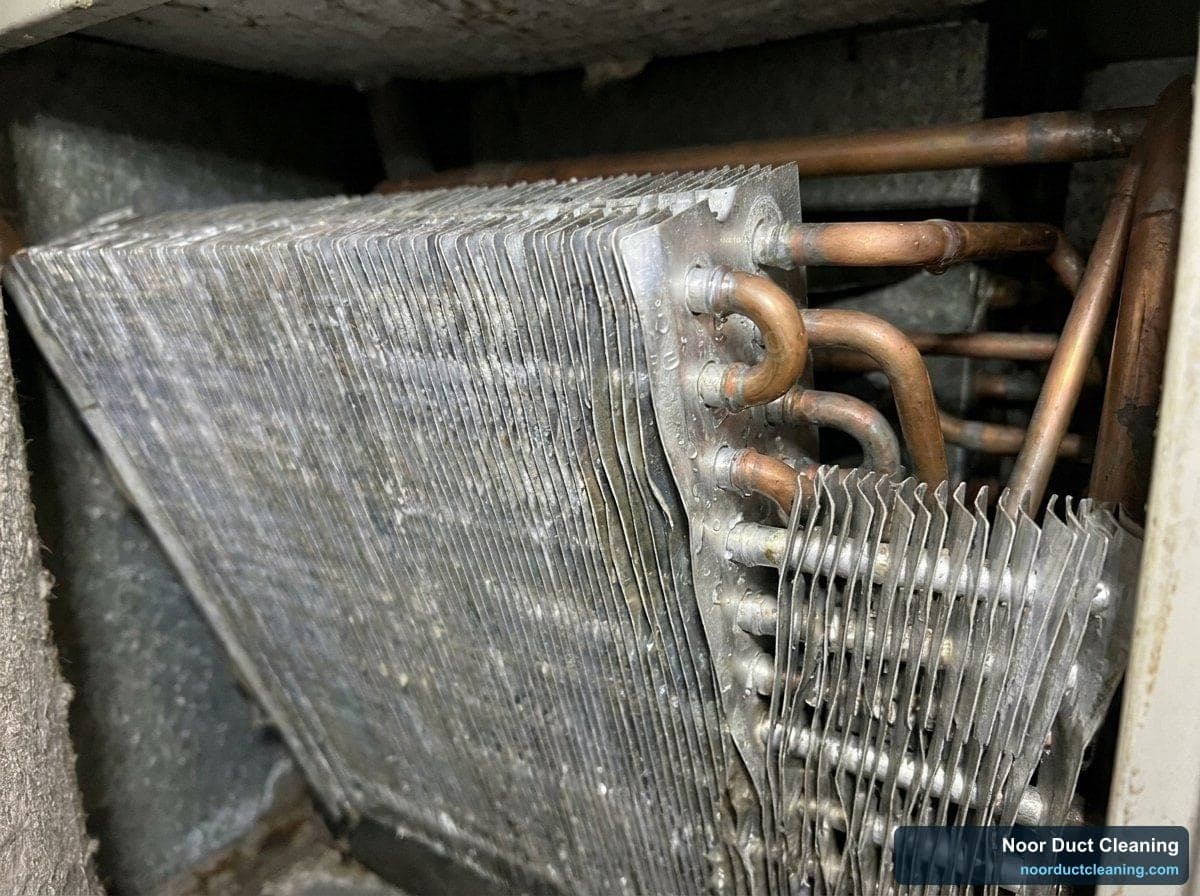
- Deep wash the coil and clean the drain tray, which is where most musty and sour smells actually live.
- Clear and flush the condensate drain line and refill a dry P-trap, which handles most sewage smells.
- Clean the ducts if the camera shows the load has moved past the coil into the supply runs.
- Fog the system with sanitisation to knock back what remains on surfaces, as a finishing step rather than a substitute for cleaning.
- Call a mould remediation specialist working to ANSI/IICRC S520 if growth is widespread rather than localised.
Where it helps to see this in context, our main AC duct cleaning in Dubai page sets out what a full clean includes, and the companion guide on how often AC ducts should be cleaned in Dubai explains when a recurring smell means you are overdue rather than facing a one-off.
Why air freshener never works
It is worth being blunt about this because it is the single most common wasted spend we see. A plug-in or spray masks the odour for an hour or two while the source, which is almost always inside the unit rather than in the room, keeps growing. The smell comes back stronger because the damp coil or slow drain that caused it is untouched.
The same logic applies to pouring bleach or disinfectant down a vent. It does nothing to the coil where the growth actually sits, it can damage the duct surface, and it adds its own chemical smell on top of the musty one. The only durable fix is to physically clean and dry the surface that is generating the odour, then keep the home inside the comfort humidity band so it does not return.
What a camera inspection tells you first
Before any cleaning, a camera inspection answers the two questions that decide the cost. First, where is the smell coming from, the coil, the tray, the drain or the ducts themselves. Second, is the dark material you can see at the grille dust, shedding liner or genuine growth. Those two answers tell you whether you need a coil wash, a drain flush, a full duct clean or a mould specialist, and they stop you paying for work the problem does not need.
It also gives you a dated record. If the smell turns out to be a mould defect rather than routine grime, that footage is the evidence that settles who is responsible, which matters in a rented apartment in Dubai Marina or JLT as much as in an owned frond villa on Palm Jumeirah.
Stop masking the smell. Book a camera inspection and fix the source with before and after proof.
Get my Dubai quoteMould spores and the damp conditions that grow them can trigger allergy and asthma symptoms, which is why Dubai Municipality sets a fungi limit of 500 colony forming units per cubic metre. If anyone in the home has asthma or allergic rhinitis, treat a persistent musty smell as a reason to inspect sooner rather than later, and fix the source rather than masking it.
Not on its own. Fogging knocks back surface growth, but if the coil, tray or duct is still coated the smell returns within days. Sanitisation is a finishing step after the coil and ducts are physically clean, never a substitute for the cleaning itself.
A smell isolated to one room usually means the problem is at that room's supply branch or a single fan coil unit serving it, rather than the whole system. A camera inspection of that branch and its grille normally finds either localised growth or a silted section of duct feeding only that outlet.
That almost always means the underlying cause was not addressed. If the coil was cleaned but the home is still overcooled to 18 degrees and running damp, mould returns. It can also mean the drain is still slow. Ask for the camera footage and check that the set point and humidity are in the 20 to 60 per cent comfort band.
It depends on the cause and your tenancy terms. A genuine mould defect usually falls to the landlord as a maintenance issue, while routine filter and light cleaning often sits with the tenant. A dated camera report showing the source is the single most useful piece of evidence if there is a dispute.
Sources
Not sure where you stand?
Serving Dubai, Sharjah and Ajman. Take the free 60-second BreatheScore or message us about your Dubai property.
Related guides
How Often to Clean AC Ducts in Dubai (By Home Type)
Competitors say everything from six months to three years. Here is how the actual standards reconcile, and a realistic interval for your home type and community.
Duct Cleaning in Springs, Meadows and Lakes Villas
The Springs, Meadows and Lakes are twenty years old now, and most of the original Emaar ductwork has never been opened. Here is what these villas actually need.
What Is DuctCam? Seeing Inside Your AC Before You Pay
A camera inside your ducts means no guessing and no upselling. Here is how DuctCam inspection works.